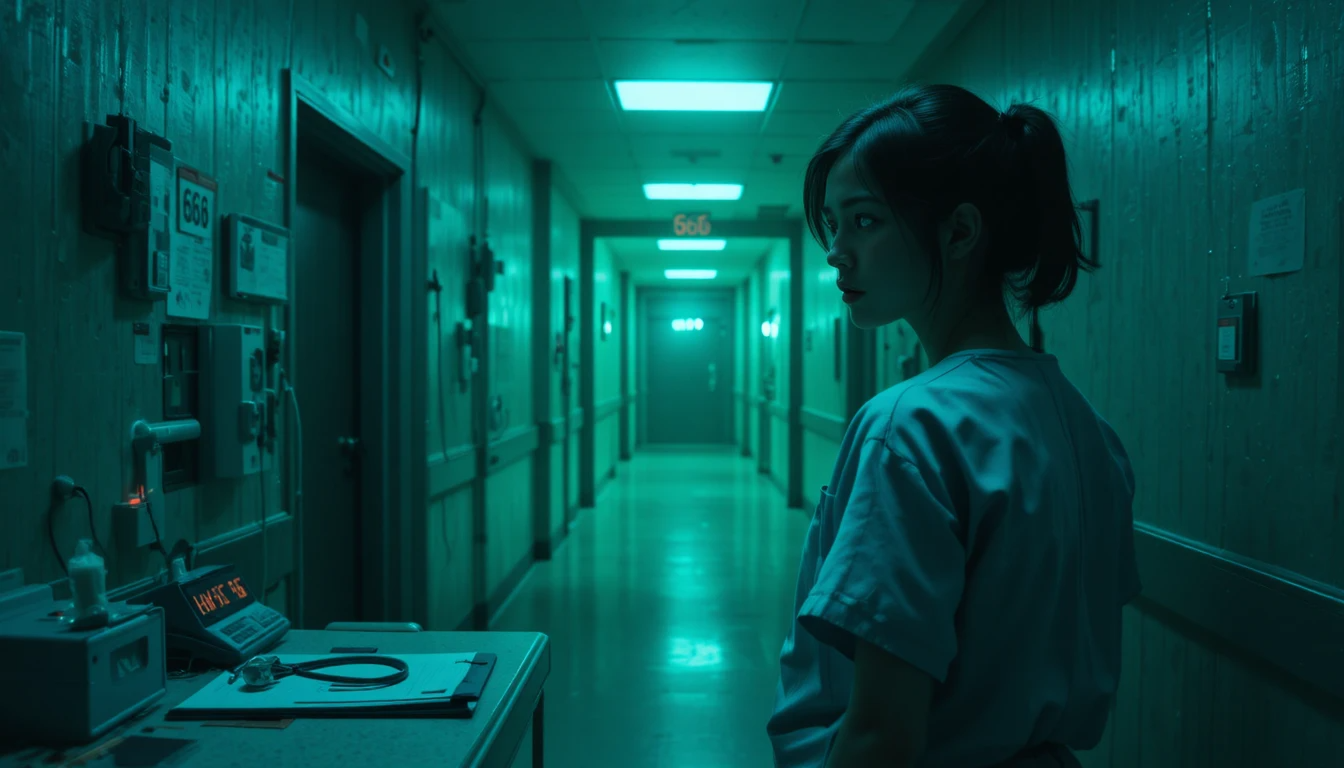
Congratulations on securing the position of night shift caregiver at Rosewood Nursing Home, located just outside Jericho, West Virginia.A mix of pride and nervous excitement took hold.This opportunity meant more than employment; it was a vocation, a gateway into the essential discipline of elder care within the distinctive setting of a long-term facility.Your primary mission was unambiguous: to guarantee the safety of residents and maintain strict adherence to all protocols. Above all, Rule Number Six.
Understanding the Unwritten Pulse of the Night Rosewood Nursing Home
During your initial evening at Rosewood, the Head Nurse passed you a laminated sheet. “Commit these to memory,” she instructed, her expression serious. “They hold the same weight as any clinical procedure.” The directives were particular, curiously exact, and appeared custom-fitted to Rosewood’s distinct history and physical layout—a frequent characteristic of older care facilities.
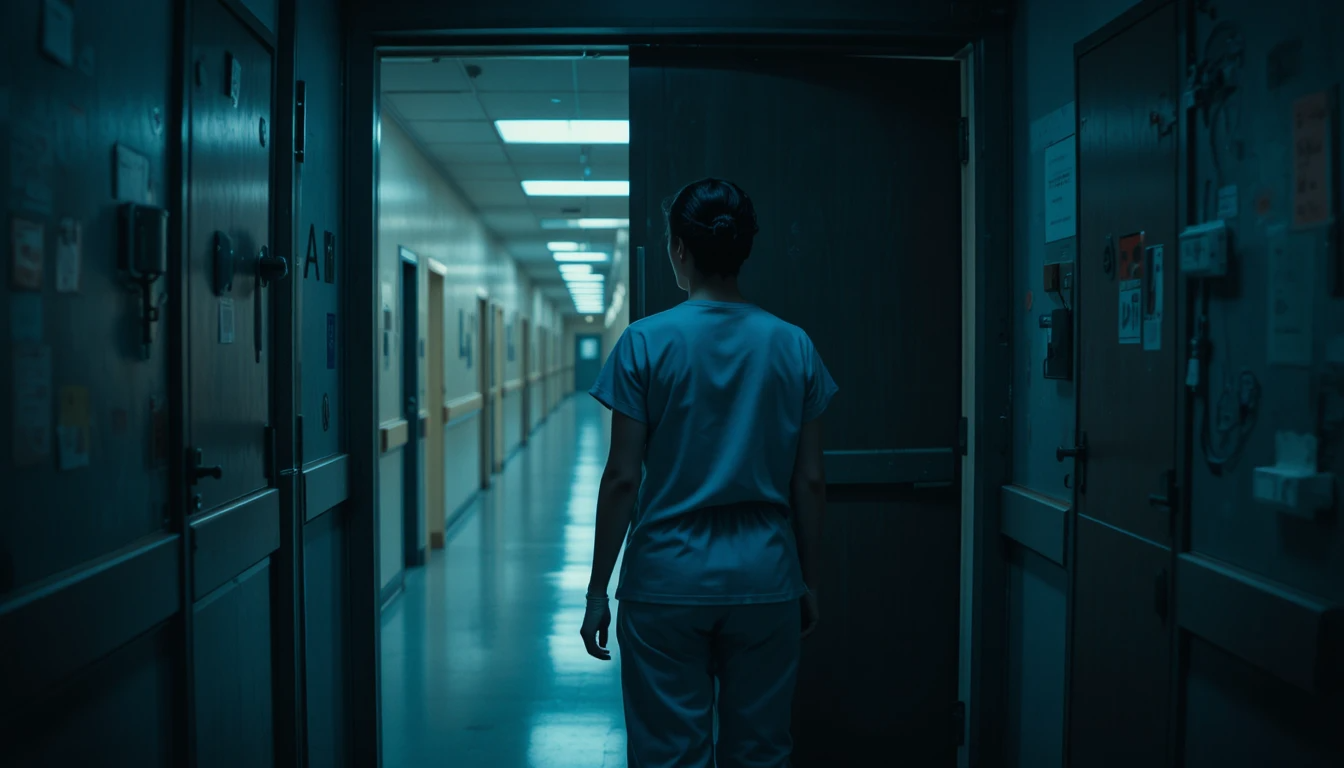
Rule No. 1 dictated
Precisely at 10:30 PM, conduct your rounds and verify the status of each resident. Should If a resident is observed speaking to someone not visibly present, do not intervene. Leave the area calmly. In professional caregiving, this behavior is understood as a common symptom of cognitive decline—potentially involving past memories, imagined figures, or perceptual changes.
Direct correction is avoided to prevent causing unnecessary distress, respecting the resident’s subjective reality. The appropriate response is to assess for immediate physical risk, then offer a calm, unobtrusive presence if necessary, but often to acknowledge their reality and withdraw.
Rule No. 2 cautioned
Should you observe an unattended wheelchair moving independently along the corridor, do not pursue it, regardless of its final position.
Safety is the highest priority. A self-moving wheelchair may signal a mechanical failure, an incorrectly engaged brake, or an uneven surface. Giving chase could result in a stumble, a fall, or accidentally guiding it into a resident’s space. The correct procedure is to secure the vicinity, approach with caution from an angle to halt it safely, and then determine the cause—verifying if a resident requires help or if the equipment needs servicing.
Rule No. 3 was precisely scheduled
At exactly 11:15 PM, administer medication to Mrs. Holloway in Room 3.0.2.
Place the medication and a glass of water on her nightstand. Ensure she is in bed before doing so.
If she is not there, complete the task without looking up at the ceiling.
This protocol exists to help you maintain focus on the resident and your duties, avoiding unnecessary distraction from the room’s fixtures or features.
Navigating the Deeper Shadows: Infrastructure and Instinct Rosewood Nursing Home
Rule No. 4 concerned the building’s structure
Past midnight, if the elevator halts unexpectedly on the sixth floor, do not exit. That level has been out of service for decades.
To maintain our licensure and fulfill our primary duty of care, it is required that all designated hazardous or non-essential service areas be permanently locked and secured. This includes, but is not limited to, closed-off wings, maintenance closets, boiler rooms, and attic or basement spaces where risks such as asbestos, unstable structures, exposed wiring, or microbial growth may be present. The core purpose of this rule is twofold: firstly, to prevent cognitively impaired residents from accidentally entering these dangerous, unmonitored spaces; and secondly, to protect staff from potential occupational hazards. This protocol is a non-negotiable standard for operational safety and risk management.
Rule No. 5 examined your judgment
*After 12:30 AM, if a phone call requests assistance in the original first-floor washroom, terminate the call. Do not proceed there.*
This ingrains a key emergency response principle. A solitary caregiver answering a possibly fabricated call could abandon the wider resident population. It might also be a hoax or a disoriented resident. Standard operating procedure requires alerting security or a colleague to check jointly, never investigating an isolated location alone. It reinforces the doctrine that your foremost responsibility is the group safety of those on your assigned unit.
And then, Rule No. 6. The one they stressed
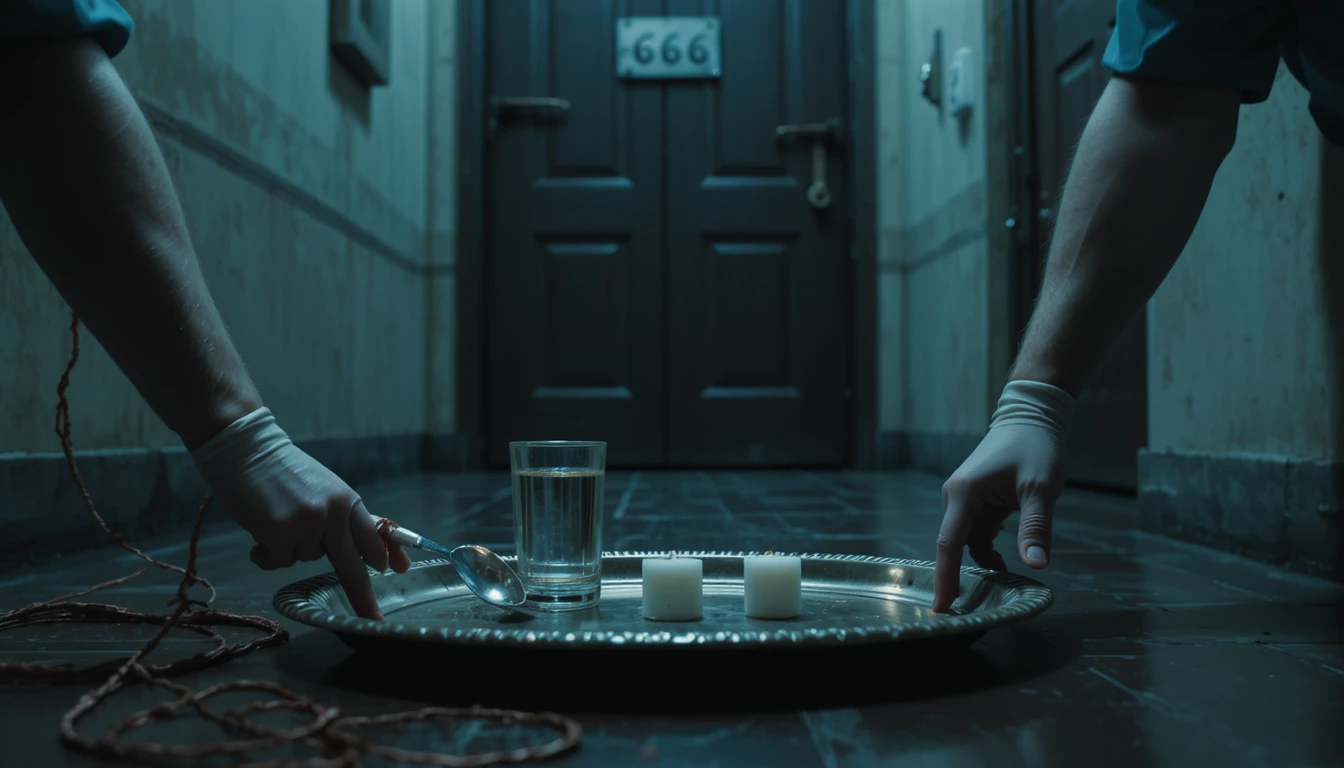
At precisely 1:00 AM, arrange a silver spoon, a glass of water, three sugar cubes, a lit candle, and a length of red string orderly on a tray outside Room 6.6.6. Rap twice on the door, then depart. Do not open the door. Do not turn around. Should the candle flame die before you arrive at your station, run.
This guideline moves beyond conventional Rosewood Nursing Home policy, entering the territory of distinctive institutional tradition.
Yet, from a professional lens, it fosters discipline, ritualistic precision, and strict compliance with procedure. The “run” command highlights the absolute necessity of heeding specific safety cues. A more practical interpretation might suggest Room 6.6.6 is occupied by a resident with profound, unpredictable behavioral needs, and the ritual is a pre-arranged sign that they have received unofficial soothing objects, thereby averting a nighttime incident. An extinguished candle could indicate a draft from an opened door—a possible wandering risk—demanding an instant emergency reaction.
The Heart of Caregiving: Beyond the Rules Rosewood Nursing Home
While Rosewood’s list is uniquely haunting, it symbolically captures the essential principles of night shift caregiving: watchfulness, routine, and empathetic objectivity. Your role is to be a poised, reliable presence. You check vital signs, replace bedding, aid with toileting, and offer comfort to those awakened by discomfort or disorientation. You record all details with precision, serving as the crucial connection between the night’s occurrences and the day team’s morning handover.
The Rosewood Nursing Home setting requires fortitude. You will observe deep fragility and instances of unanticipated warmth—a recalled story, a whispered gratitude, the serene expression of a resident you’ve soothed back to slumber. The “Rules,” however unusual, create a structure to shield both you and the residents, enabling you to deliver the best possible care within a demanding, continuous operation.
Therefore, as you pace the corridors of Rosewood, or any care home, your steps even, your awareness sharp, remember this: You are the protector of the silent hours. Your commitment to protocol, whether ordinary or singular, is what upholds the sanctuary. You merge clinical accuracy with human compassion, and you recognize that occasionally, the most expert action is to heed a solitary dialogue, stabilize a wandering wheelchair, set a tray down softly at a specified door, and continue moving ahead—without a backward glance.
Remain composed, follow the protocols, and good fortune, Caregiver. The night, and those in your care, are relying on you.

One thought on “Surviving the Night Shift at Rosewood Nursing Home: 6 Rules”