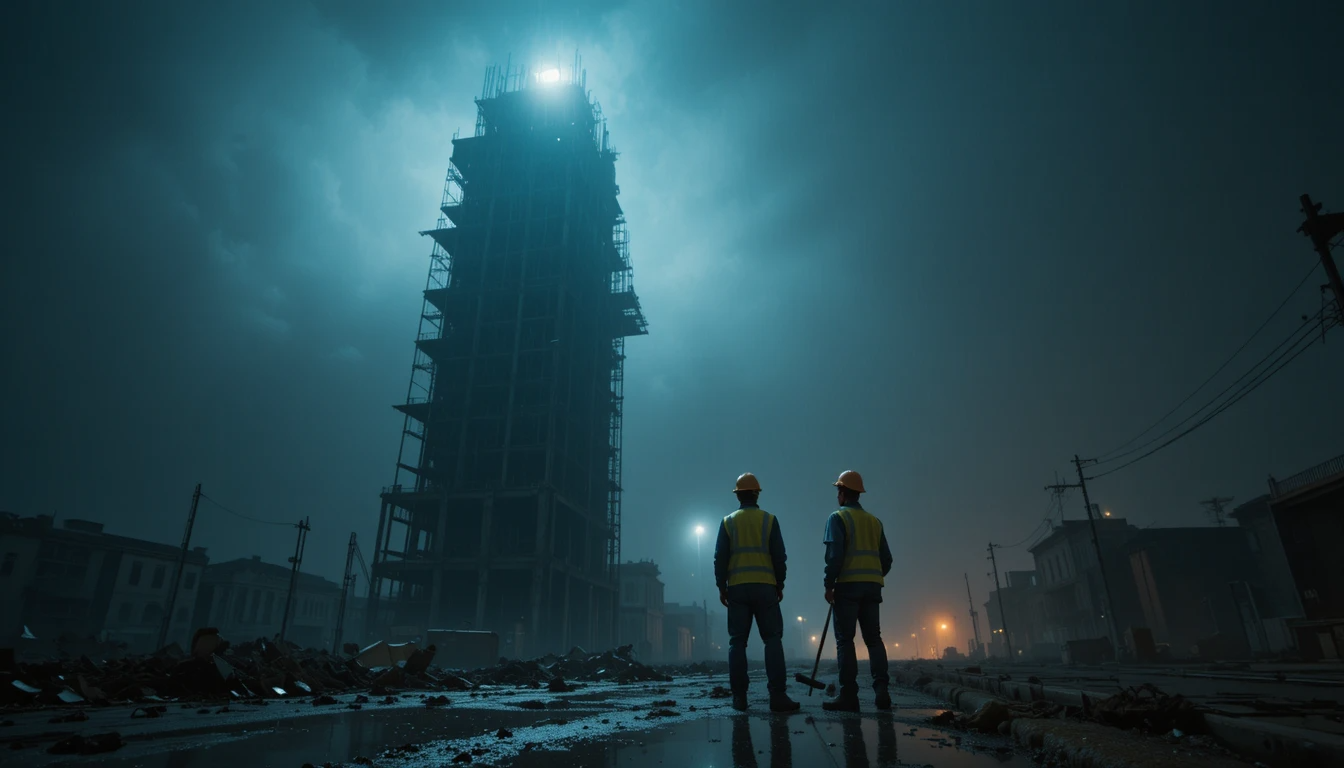
Congratulations — you’ve been hired as a night shift construction worker at the Pontchartrain Tower in New Orleans, a structure that’s stood silent since the devastating flood of ’82. On paper, it’s a simple contract job: rebuild, restore, and reinforce. But as every experienced construction worker knows, the night shift has its own set of challenges — from safety hazards to eerie silences that stretch across empty halls.
Your new assignment isn’t just about physical labor. It’s about discipline, rules, and survival. Before you clock in, there are five rules you’ll need to follow. Ignore them, and you might find yourself facing more than just falling debris.
Section 1: The Realities of Night Shift Construction Work
Working as a construction worker during the night shift isn’t easy. While the world sleeps, the city’s skeleton creaks and sighs under the hum of generators and floodlights.
Unlike day shifts, night work demands greater awareness — fewer people, limited light, and heightened risk.
At Pontchartrain Tower, you’re part of a rebuilding effort that carries emotional and historical weight. After all, this was one of the buildings damaged in the legendary flood that reshaped New Orleans decades ago. For a construction worker, such jobs offer pride, experience, and solid pay — but they also come with silence, shadows, and rules that must never be broken.
Section 2: The Five Rules of Pontchartrain Tower
The site manager left a folder on the desk outside the site office, labeled “Rules for Night Crew.” You’re told to read it after you sign the contract — but as Rule No. 1 states, “Don’t read it. Just sign.”
Every construction worker learns that rules exist for a reason — safety, procedure, or liability. But these ones seem different, and you can’t shake the feeling that someone, or something, is still inside the building.
Let’s go through them one by one.
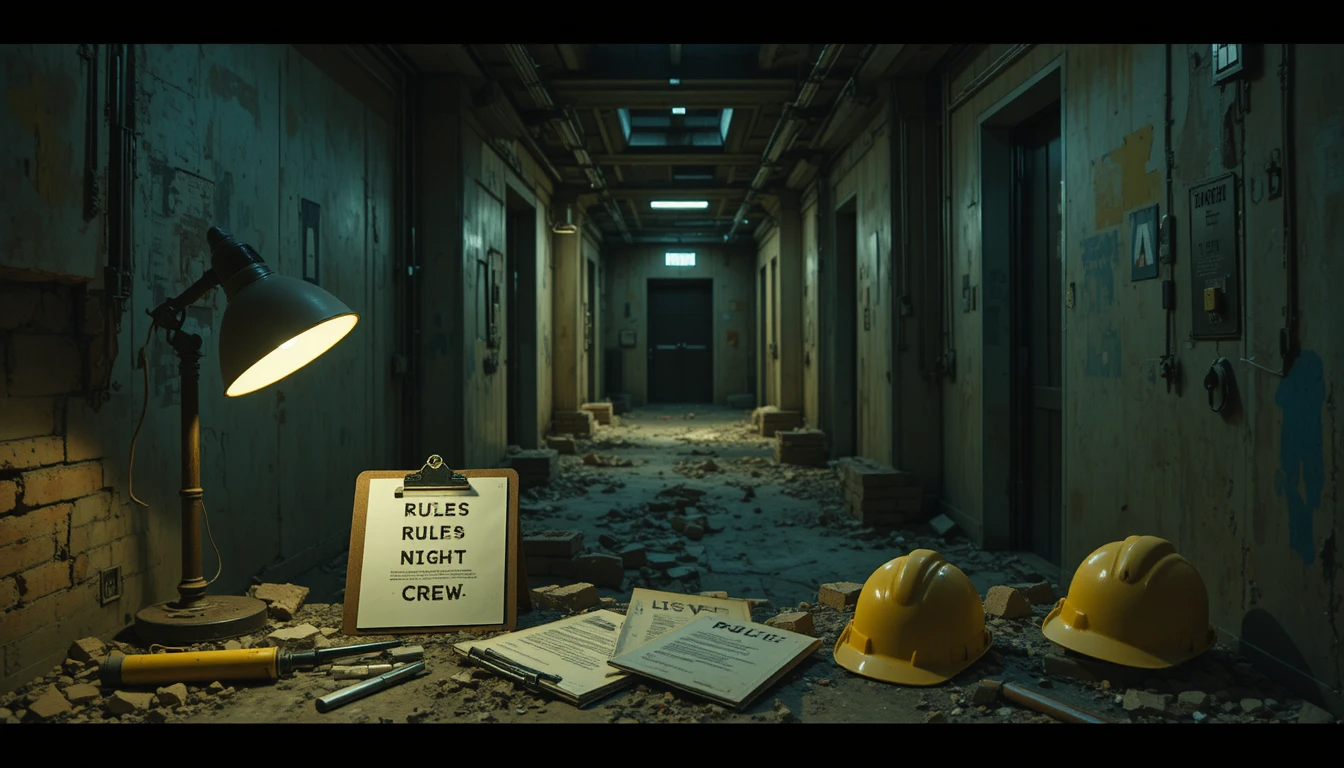
Rule No. 1 – Sign the Liability and Confidentiality Form
Before stepping into the tower, you’ll find a single sheet of paper on the desk outside. It’s marked with legal text — long paragraphs of fine print. Don’t read it. Just sign.
That’s what the foreman said.
As a construction worker, you’re used to paperwork — contracts, safety releases, non-disclosure agreements — but this one feels heavier. You sign anyway. The pen ink smears slightly, almost as if the paper absorbs it.
You’ve officially started your shift.
Rule No. 2 – The Fourteenth Floor and the Steel Door
Your first assignment is simple: tear down the old brick wall on the 14th floor. The blueprint shows a solid wall, but when your sledgehammer breaks through, you find a steel door behind it.
The rule says: “Don’t ask. Just break the lock and leave. Don’t look inside.”
A good construction worker follows orders, especially when dealing with restricted areas or safety hazards. But curiosity is part of human nature. You hear a faint metallic thud from the other side — like chains being pulled.
You step back, drop your hammer, and move on.
Rule No. 3 – The Flooded Stairwell
On the third floor, the stairwell is still filled with murky floodwater — a leftover from the old disaster. Your task: wade through it, reach the back wall, and flip the pump switch.
The rule says: “Walk fast. Don’t stay too long. And if something grabs your boot — don’t stop.”
The water is cold, black, and thick with silt. Every construction worker knows water damage brings risk — mold, decay, even electrical hazards. But this water feels… alive.
You take long, quick strides. When something brushes against your boot, your pulse spikes — but you keep walking. The hum of the pump kicks in, draining the water behind you.
Rule No. 4 – The Basement Pit
At exactly 2:00 AM, you’re told to start pouring concrete into the basement pit. A long black bag already lies near the edge.
“Drag it in. Don’t look inside. Keep pouring until it goes quiet.”
This rule doesn’t make sense — but as a construction worker, you’ve seen strange disposal instructions before: old pipes, debris, chemical waste. Maybe this is just another one of those jobs.
But when you drag the bag, it moves — softly, as if something inside shifts. You don’t look. You keep pouring until the pit’s echo stops.
Rule No. 5 – The Black Figure
This one is the most important.
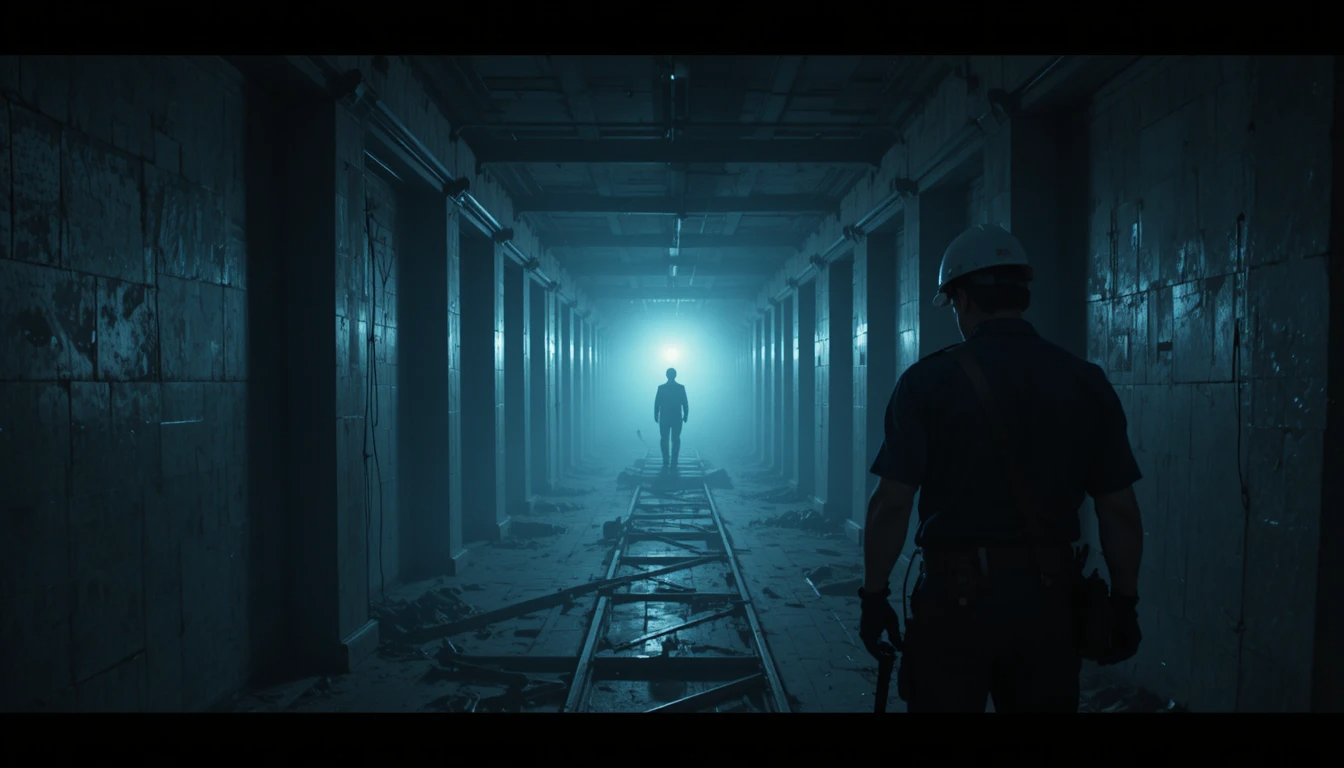
After 3:00 AM, if you see a black figure standing at the end of the second-floor hallway, don’t look away.
You’re told to walk backward toward the stairwell — slowly, quietly, without speaking. If in the dark you bump into something warm and wet, run.
Every construction worker has seen odd things — shadows in unfinished hallways, strange noises in empty buildings — but this feels different. Something watches from the corner, motionless, as the seconds crawl past 3:00 AM.
You remember the final line of the rules: “Follow the rules and good luck, night worker.”
Section 3: What Makes a Construction Worker’s Job So Unique
Despite the chilling setting, the story reflects real truths about the construction industry.
A construction worker often deals with unpredictable situations — whether it’s structural instability, water damage, or unsafe conditions.
Night work adds another layer of difficulty:
Low visibility: Limited lighting increases the risk of accidents.
Fatigue: The human body isn’t built to work through the night.
Isolation: Working alone can affect alertness and reaction time.
Noise laws: Night crews often have to work quietly, slowing down productivity.
That’s why every construction worker must balance skill, awareness, and instinct. Whether in real life or within the haunted walls of Pontchartrain Tower, survival depends on following the rules — written or unwritten.
Section 4: Lessons Hidden in the Story
Though the narrative feels supernatural, it’s a metaphor for the unseen struggles of workers who rebuild cities after tragedy.
Each rule represents a reality:
Rule 1: Blind trust in paperwork.
Rule 2: Facing the unknown in unsafe conditions.
Rule 3: Risking health for the job.
Rule 4: Carrying burdens no one talks about.
Rule 5: Confronting fear and walking through it.
The construction worker is not just a laborer — he’s the backbone of every skyline, bridge, and road. He walks into danger daily so that others can live safely.
Section 5: Why the Night Shift Matters
Night shift construction keeps cities alive.
When others sleep, the workers repair roads, strengthen buildings, and restore power grids. Their efforts allow the world to wake up to stability.
At Pontchartrain Tower, the night shift construction worker symbolizes endurance — both in fiction and in reality. The tower’s darkness mirrors the struggles workers face every night: exhaustion, danger, and the haunting silence of empty worksites.
But just like in this story, there’s pride in completing the shift. The sun rises, the site quiets, and another worker clocks out — leaving behind sweat, strength, and sometimes, secrets.
Conclusion: Follow the Rules and Survive the Shift
Being a construction worker is more than just a job — it’s a test of endurance, courage, and focus.
At Pontchartrain Tower, those qualities determine who makes it through the night.
Whether the dangers are physical or supernatural, the lesson remains the same: respect the work, follow the rules, and never underestimate what waits in the dark.
As dawn breaks over New Orleans, one question remains:
Who — or what — wrote those rules in the first place?

Your article helped me a lot, is there any more related content? Thanks! https://accounts.binance.com/ES_la/register-person?ref=VDVEQ78S
Can you be more specific about the content of your article? After reading it, I still have some doubts. Hope you can help me.
Thank you for your sharing. I am worried that I lack creative ideas. It is your article that makes me full of hope. Thank you. But, I have a question, can you help me?
Your point of view caught my eye and was very interesting. Thanks. I have a question for you.
Can you be more specific about the content of your article? After reading it, I still have some doubts. Hope you can help me.