
Congratulations, you’ve been hired as the night shift Caregiver at Rosewood Nursing Home, just outside Jericho, West Virginia.Your application highlighted empathy, steadfastness, and a profound sense of responsibility—exactly the traits they wanted. The interview was swift, the administrator’s gaze assessing not just your competence, but your potential for… compliance. The offer arrived without delay.
Now, holding the letter, the title caregiver rests upon you with a distinct and heavy significance. Your duty is to ensure the residents’ safety and to adhere to the protocols. Most importantly, to Rule Number Six.
This is no ordinary Caregiving post. Rosewood, a majestic but weary structure that seems to swallow the Appalachian dusk, functions by a different set of principles after dark. The rules provided are not mere suggestions; they are the foundation of survival for your shift and, you intuit, for something much more ancient. Consider this your genuine orientation. Here, a caregiver’s understanding is their only true protection.
Rule No. 1: The Symphony of the Unseen
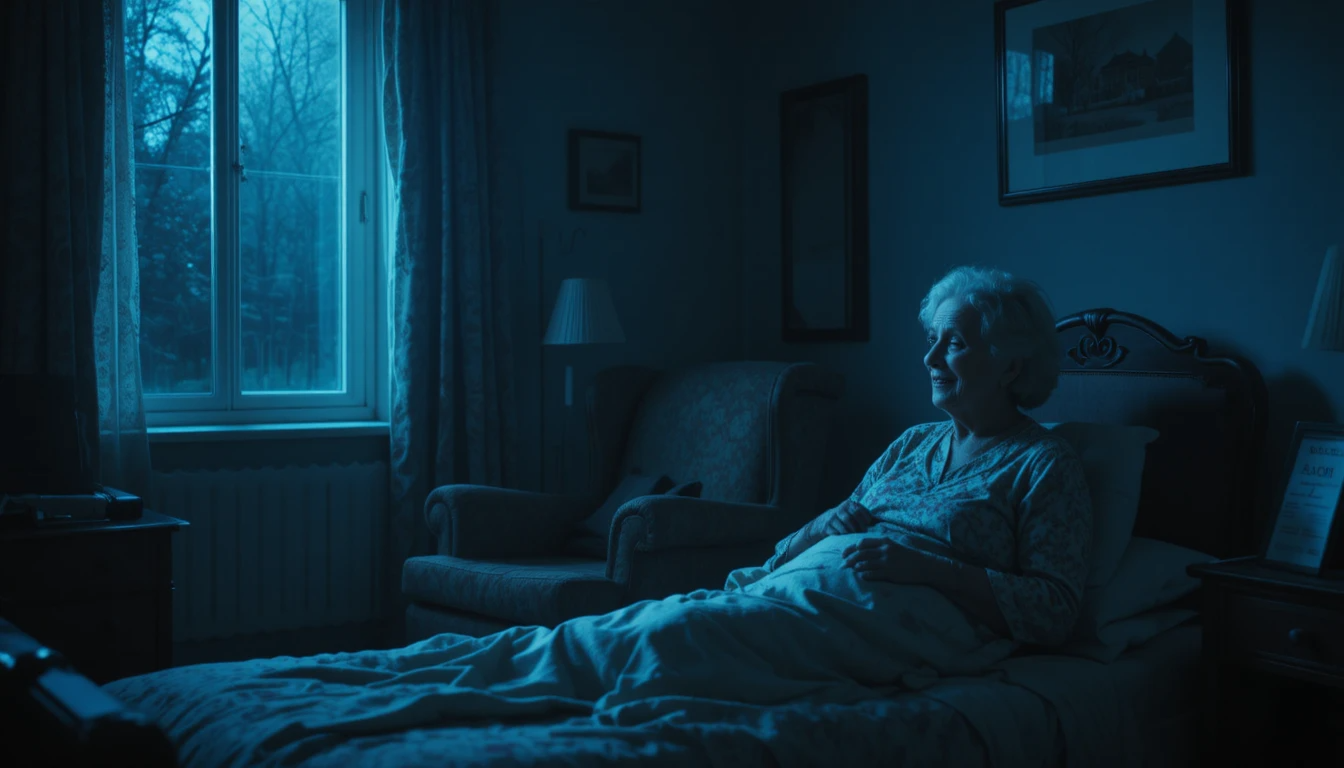
Your shift starts at 10 PM. The day staff departs with rushed farewells, and Rosewood’s attentive silence envelops everything. Precisely at 10:30 PM, you commence your initial rounds. Attending to each resident is a caregiver’s primary task. In Room 117, Mrs. Edith is alert, her eyes sharp and fixed on the empty corner. “He’s describing the rain again,” she murmurs, a slight smile on her face. The chair is unoccupied.
Your instinct to comfort and reorient tugs at you. But the rule is absolute: Ignore it and walk away. This is your essential first lesson. At Rosewood, a caregiver tends to the residents within their own reality, not the one you might impose. You are a keeper of their nightly tranquility, not a judge of their perceptions. You offer a gentle, professional nod and proceed, her solitary dialogue fading behind you. Success here requires mastering selective attention.
Rule No. 2: The Independent Journey
Later, while documenting at the nurses’ station, a soft, persistent squeak resonates from the east wing. A classic wooden wheelchair, its seat visibly empty, rolls at a constant pace as if guided by an unseen, purposeful force. Every caregiving impulse urges you to stop it—a potential hazard.
Yet Rule No. 2 is unambiguous: Do not pursue it, regardless of its destination. You observe, your pulse quickening, as it halts perfectly before the locked library door. It simply… remains. You wrench your focus back to your paperwork. This rule instills the caregiver’s discipline of restraint. Sometimes, ensuring safety means permitting certain events to conclude without intervention.
Rule No. 3: The Ceiling Above Mrs. Holloway
At exactly 11:15 PM, it is time for Mrs. Holloway’s medication in Room 302. You prepare her pills and a clean glass of water with the thoroughness of a committed caregiver.
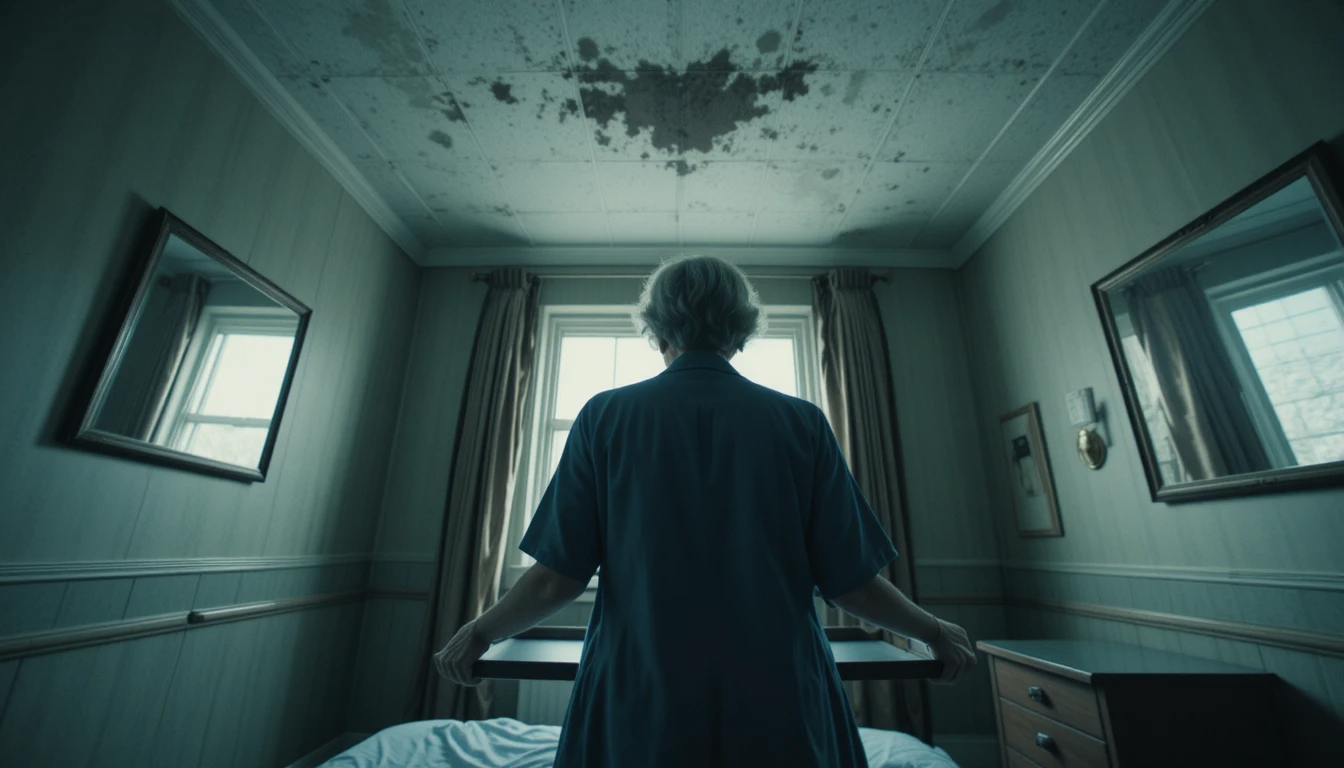
A soft knock, then you enter. She is not resting. She stands at the window, her shape outlined against the dark West Virginia sky. “The dust is so thick up there,” she states casually. The rule burns in your thoughts: Do not look up at the ceiling.
You keep your eyes forward, set the medication and water on her table, and announce in your steadiest professional voice, “Your medication is ready, Mrs. Holloway.” A subtle, disquieting weight seems to press down from above, a feeling of being scrutinized. You leave without glancing upward. This rule demands total commitment to the service. A caregiver’s role is to provide care, not to acknowledge the environment’s disturbances.
Rule No. 4: The Silent Floor
Past midnight, the ambiance changes. You ride the elevator to the third-floor supply closet. The car trembles, lights stutter, and with a harsh ding, it halts. The doors part not on the third floor, but on the sixth. The corridor is a sepulchre of gloom, filled with shrouded shapes.
The chill air carries the scent of wet stone and decay. Rule No. 4 echoes urgently: Do not walk out. That level has been closed for decades. Your finger jabs the “Close Door” button repeatedly. The doors seal with torturous delay. This rule is a blunt reminder for a caregiver: recognize the limits of your domain. Entering prohibited spaces, for any reason, jeopardizes your capacity to safeguard those under your active watch.
Rule No. 5: The Plea You Cannot Answer
At 12:30 AM, the station phone rings, a shrill intrusion. You answer. Hiss fills the line, then a voice, faint and stretched thin, begs, “Help… the old restroom… first floor… please…” It speaks of the washroom that has been locked and under renovation since your arrival.
Your very core as a caregiver yearns to help. But Rule No. 5 is inflexible: Hang up the phone. Do not go. You replace the receiver, the action feeling like a betrayal of conscience. This is the ultimate trial of trust in the established procedures. A caregiver must sometimes accept that the most merciful choice is a calculated refusal to act, lest they become another soul requiring salvation.
Rule No. 6: The Offering at the Threshold
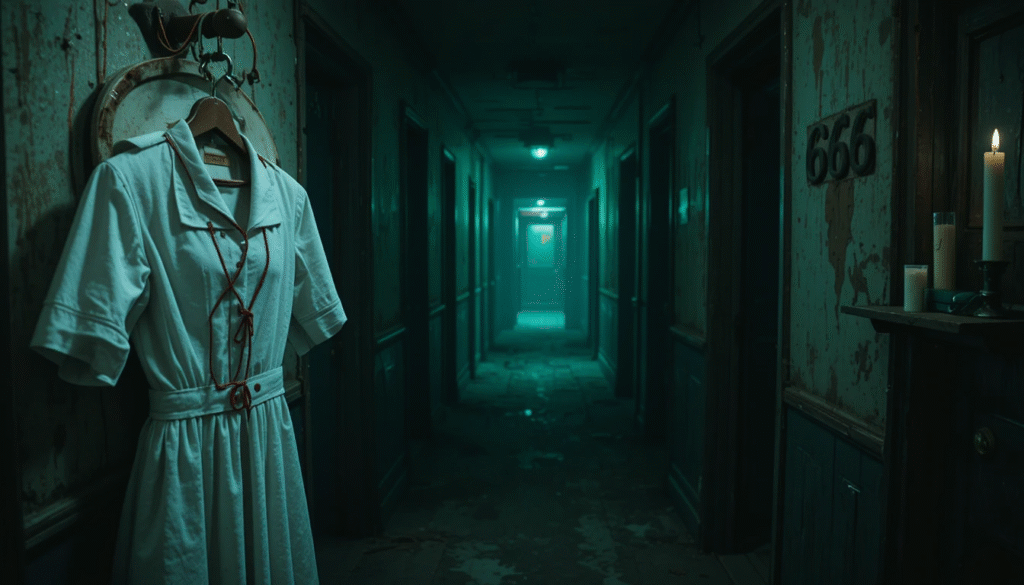
Then, 1:00 AM comes. This is the crux of your peculiar agreement, the reason for the deep scrutiny during your interview. You collect the specified items: a silver spoon, a glass of water, three sugar cubes, a lit candle, a length of red string. You set them in order on a small wooden tray. The hall leading to Room 666 seems to stretch, the darkness more profound. You position the tray on the floor before the plain, heavy oak door. You knock twice—the sound absurdly sharp in the quiet. Then, you turn and leave. You do not open the door.
You do not turn around. You are a caregiver, fulfilling a necessity beyond your understanding. If the candle’s flame, that frail, wavering light, dies before you return to the lit station, the directive is clear: Run. This ultimate rule defines the entire ordeal: execute your duty with exactness, relinquish any command over the result, and recognize when your function transitions from caregiver to a potential recipient of care.
The Core of the Caregiver Vocation at Rosewood
What does it mean to be a caregiver under such exceptional circumstances? It means your empathy is bounded by unwavering discipline. Your watchfulness extends beyond the residents’ physical needs to the preservation of a delicate, supernatural balance.
The abilities you develop here—imperturbable calm, rigorous obedience to protocol, command over your own curiosity and dread—are the extreme enhancements of traits found in all exemplary caregivers. You discover that to care can mean performing a strange rite, that security may hinge on what you consciously overlook, and that the most significant service you can render is safeguarding a brittle, eerie peace.
So, assume your post, caregiver. The night at Rosewood is lengthy, and its rules are your sole guide. Uphold them with the dedication that secured you this position. Remain calm. Follow the rules. And good luck. The residents, in their own particular way, are relying on you.
5 Reasons Why the Marlene’s Diner Night Job is a Dangerous Secret



Pingback: Santa Claus Hiring: The 7 Rules & 1 Terrible Secret. - workveez.com