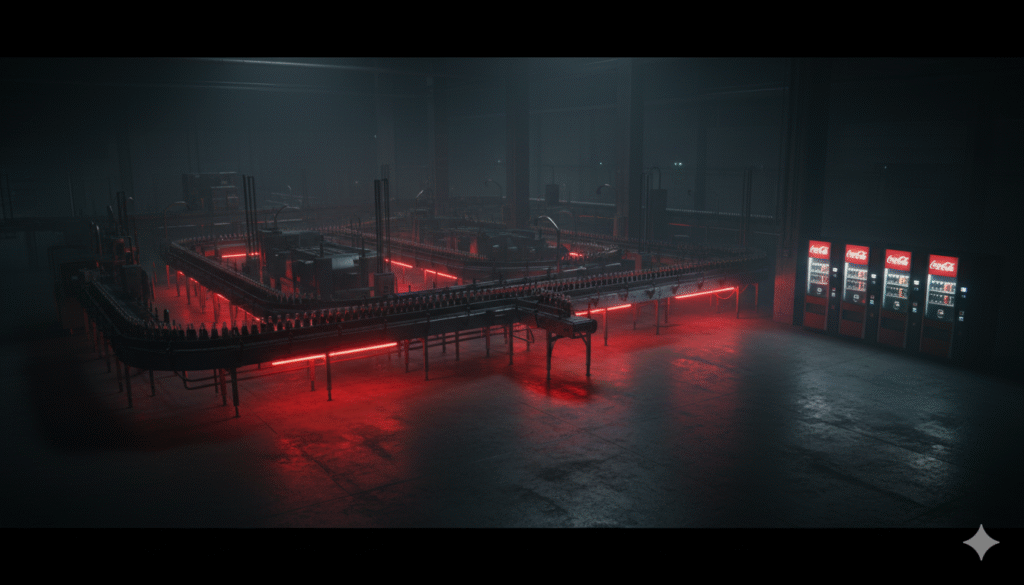

Congratulations—you and the person you tagged have officially been hired for the night shift at the most isolated Coca Cola plant in the country. It’s the opportunity of a lifetime: a high-paying role with $80 per hour on the table, plus benefits, housing, and the prestige of working with one of the world’s most famous beverage companies.
But this Coca Cola plant isn’t like the ones you’ve seen in commercials. There are no nearby towns, no visible roads—just a dark field stretching endlessly around the facility. The nearest gas station is hours away. And once your shift begins, the doors lock automatically until morning. You’re completely alone… or at least, that’s what management says.
If you’re ready to take on the challenge, here’s what your job really involves—and the rules that determine whether you’ll make it till sunrise.
Section 1: The Job Description—Night Shift Duties
Working at the Coca Cola plant during the night shift may sound simple on paper. Your tasks include:
Monitoring the vending machines and conveyor belts.
Ensuring product quality during automated bottling.
Logging temperature and humidity readings.
Performing hourly safety checks across all zones.
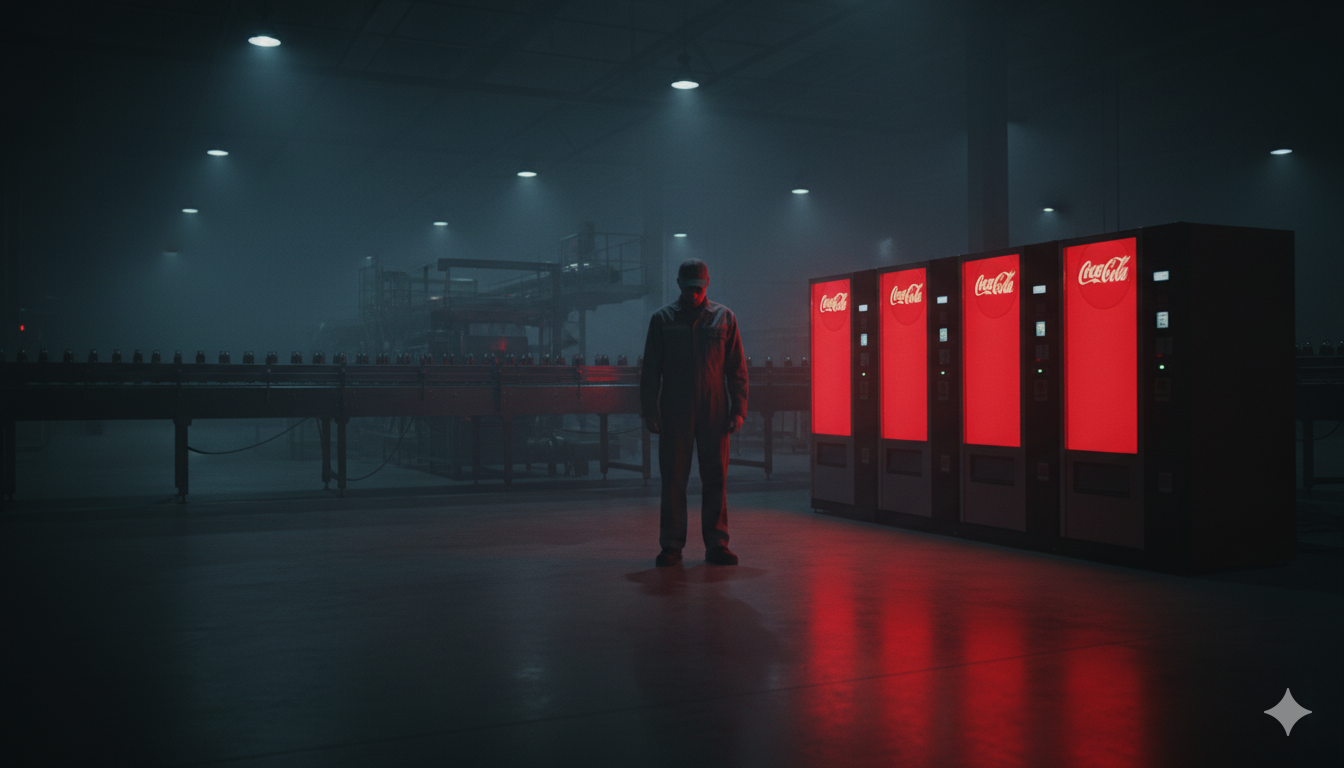
The work is repetitive but strangely calming. The hum of machinery, the flicker of red LEDs, and the rhythmic clinking of glass bottles form an almost hypnotic background. But every employee learns quickly—something about this plant doesn’t follow normal rules of automation.
Section 2: Rule #1 – The Vending Machine Test
Every worker is given a small notebook labeled “Plant Regulations: Midnight Operations.” The first page contains an unsettling line:
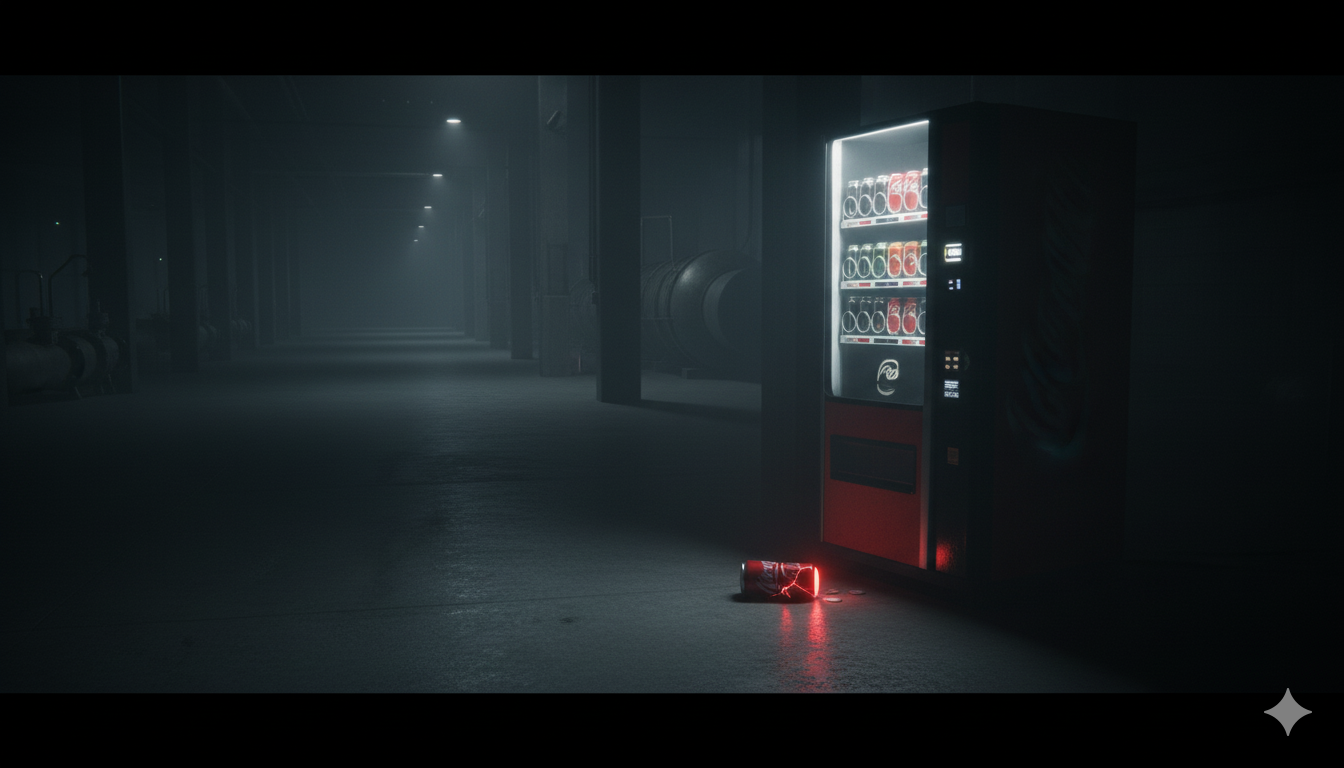
“If a vending machine dispenses a can on its own, do not open it. Leave it on the ground and walk away. If it disappears, do not look for it.”
This rule might seem superstitious, but old employees swear by it. Cameras once caught a can rolling into the darkness, vanishing into thin air. When the worker tried to retrieve it, his name was erased from the attendance system—his ID simply stopped existing.
Management calls it “a system glitch,” but workers whisper otherwise.
Section 3: Rule #2 – The Conveyor Belt Incident
At exactly 2:00 AM, pay attention to the main conveyor belt. If you see a Coca Cola bottle spinning by itself, the manual says to turn off the lights and remain still until the noise stops.
Some say it’s static electricity. Others claim the bottle is being watched by something invisible. What’s certain is that any worker who tried to “fix” the issue never clocked out again.
When the lights come back, the bottle will be gone—and your shift can continue like nothing happened. At the Coca Cola plant, silence is the best response to the unknown.
Section 4: Rule #3 – The Sound of a Can Opening
Around 2:30 AM, workers sometimes hear the faint click-hiss of a can opening behind them. The natural instinct is to turn around.
Don’t.
“The one who opened it does not want to be seen.”
That’s printed in bold letters in the employee guide. The previous night guard once turned to check—and the security feed recorded him looking into something unseen, eyes wide in terror, before the footage cut to static.
When management found the recording, the timestamp read 3:33 AM. No one could explain why.
Section 5: Rule #4 – The Darker Bottle
Every batch of Coca Cola passes through quality control, but sometimes, a bottle appears darker than usual.
Workers say if you stare at the reflection in the glass for too long, it stares back differently. You might see yourself smiling when you’re not. You might see someone else entirely.
In training, supervisors warn: “Mark the bottle as defective and send it down the disposal chute. Do not follow it.”
At this Coca Cola plant, even the products seem to have a mind of their own.
Section 6: Rule #5 – The Screen with Your Name
The most chilling rule of all appears at the end of the manual:
“If at 3:33 AM a machine displays your name on its digital screen—run. There won’t be a second chance.”
This has only happened once, according to the plant logbooks. The machine printed an employee’s name, along with a message: ‘Time served.’
The lights flickered, the security system glitched, and every bottle on the conveyor belt shattered simultaneously. The worker was never found. Since then, the Coca Cola plant shuts down all power systems for three minutes at exactly 3:33 AM every night.
Section 7: Why the Coca Cola Plant Still Hires
You might wonder—why does this facility still operate if these stories are true? The answer is simple: production never stops.
The Coca Cola plant provides millions of bottles every month, and no manager has ever acknowledged the strange events officially. They call them “maintenance anomalies” or “camera distortions.”
The pay rate of $80 per hour ensures a steady stream of new employees—young, ambitious, and desperate for a job. Most don’t last more than a week. Some last one night. The plant doesn’t ask why they quit.
Section 8: A Lesson in Obedience
The secret to surviving at the Coca Cola plant is obedience. The rules aren’t suggestions—they’re survival instructions.
You don’t question the sounds.
You don’t fix what’s not broken.
You don’t open what opens itself.
If you follow the list exactly, you’ll get your paycheck in the morning. The company is generous. It always pays—sometimes even to those who never clock out.
Section 9: The Truth Behind the Silence
Some ex-employees claim the plant is built on top of something ancient—an underground aquifer that hums like electricity. Others say the machines have absorbed too much energy from decades of repetition, forming a consciousness of their own.
Whatever the reason, the Coca Cola plant stands as a symbol of modern industry—and a reminder that not every factory runs on logic alone.
If you ever get the job offer, read the manual carefully. It may be the most important document of your life.
Conclusion: The Pay Is Good, But the Rules Are Everything
So, are you ready for your first shift at the Coca Cola plant? Remember, $80 per hour sounds tempting—but every mistake could cost more than money.
As the night grows darker and the machines hum louder, you’ll understand why the old workers whisper a single phrase before clocking in:
“At this plant, even the drinks watch you.”
Follow the rules. Don’t look back. And if the vending machine dispenses a can on its own… walk away.



I don’t think the title of your article matches the content lol. Just kidding, mainly because I had some doubts after reading the article.
Can you be more specific about the content of your article? After reading it, I still have some doubts. Hope you can help me. https://accounts.binance.info/sl/register?ref=I3OM7SCZ
I don’t think the title of your article matches the content lol. Just kidding, mainly because I had some doubts after reading the article.
Your article helped me a lot, is there any more related content? Thanks! https://www.binance.com/pt-BR/register?ref=GJY4VW8W
Your article helped me a lot, is there any more related content? Thanks! https://accounts.binance.info/register-person?ref=IXBIAFVY
I don’t think the title of your article matches the content lol. Just kidding, mainly because I had some doubts after reading the article.
Your point of view caught my eye and was very interesting. Thanks. I have a question for you. https://accounts.binance.info/es/register-person?ref=RQUR4BEO
Your point of view caught my eye and was very interesting. Thanks. I have a question for you.