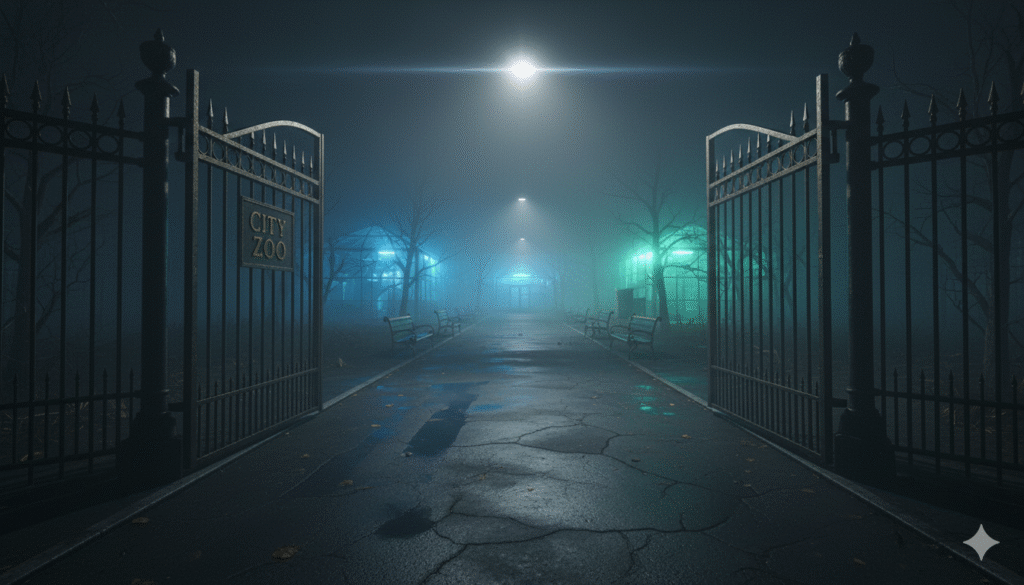

Congratulations, you’ve been hired as a night worker at the City Zoo.It sounded easy — walk the grounds, check the enclosures, make sure the animals are safe. But once the gates closed and the night took over, you realized something terrifying: you’re not the only one awake inside the City Zoo.
The Night Job That Starts Simple
Your first shift began with a list of routine duties:
Monitor the security cameras.
Walk around every hour.
Check the locks and gates.
Make sure all animals have food and water.
It felt like any other night shift job — quiet, simple, maybe even boring.
But your supervisor’s final words before leaving made you uneasy:
“Follow every rule on that sheet. And whatever you do, don’t go near the far enclosure after 1:30 AM.”
You laughed it off then. But laughter doesn’t last long at the City Zoo.
When the Zoo Comes Alive After Midnight
The first hour was fine. You walked past the lion exhibit, the giraffes sleeping peacefully, the faint hum of streetlights buzzing overhead.
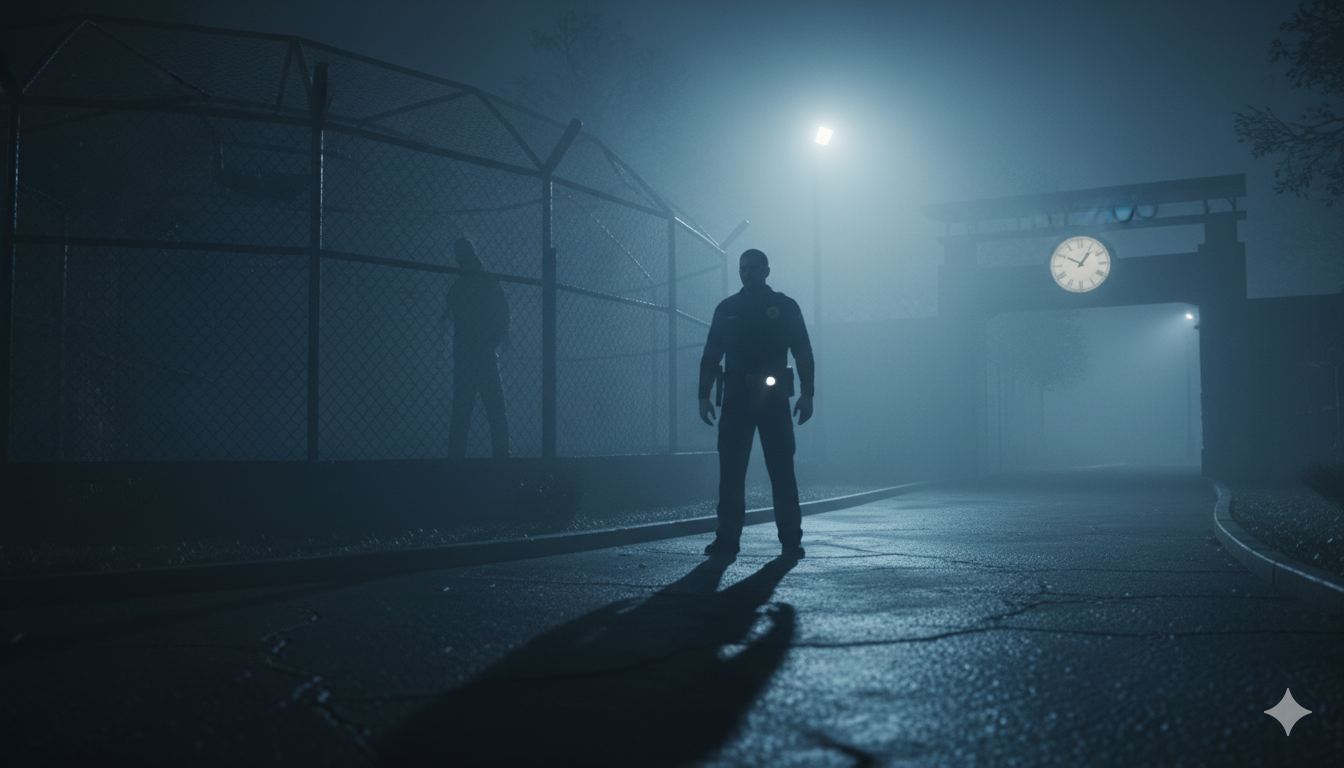
But around 1:25 AM, something changed. The air grew heavy. The cameras began to glitch — static crawling across the screens. You noticed something tall moving near the back fence.
That’s when Rule No. 1 flashed in your mind.
Rule No. 1 — Stay Away from the Far Enclosure Between 1:30 and 2:00 AM
Every zoo has a “restricted area,” but at the City Zoo, the far enclosure isn’t off-limits because of dangerous animals — it’s off-limits because of what walks there after midnight.
They call them The Grievers.
They’re not in any zoo record or biology book. They don’t belong to this world.
At 1:45 AM, the motion sensor light flickered on in the far enclosure — but the camera showed nothing. Just empty darkness and a faint shadow stretching across the path.
You froze.
Even breathing felt too loud.
That’s when you understood why the rule existed.
Rule No. 2 — Never Check Noises from Cages
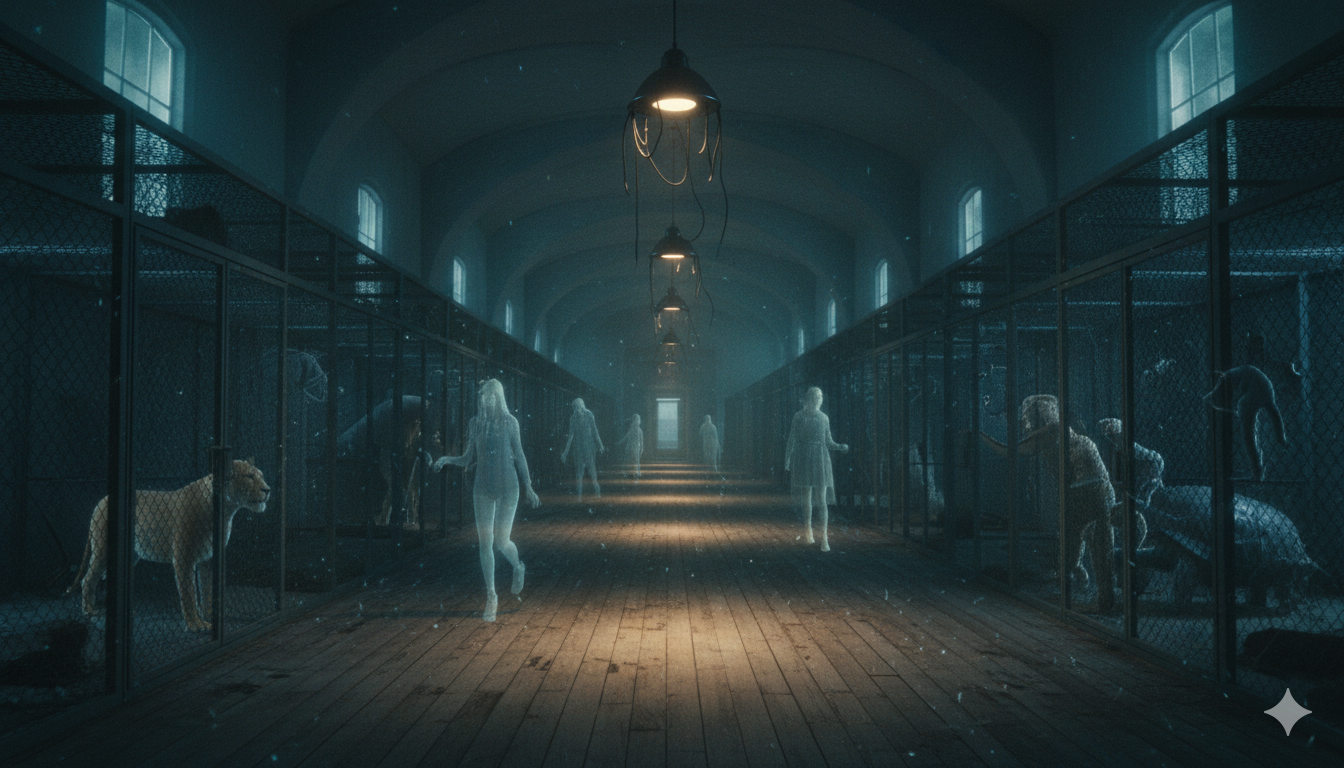
Around 2:10 AM, you heard a strange clicking sound echo through the halls of the reptile house. You checked the camera — every animal was asleep. But the sound kept repeating.
You almost picked up your flashlight — but then you remembered the second rule:
“If you hear something coming from a cage, do not investigate. It isn’t the animals. The Grievers are trying to lure you in.”
You stepped back, heart racing. The clicking grew faster, louder, then stopped suddenly — as if something realized you weren’t coming.
At that moment, you whispered to yourself:
“Maybe I shouldn’t have taken this job at the City Zoo.”
Rule No. 3 — Never Trust the Lights
By 3:00 AM, the silence was broken by the buzzing of the lamps outside the tiger enclosure. One by one, the lights started flickering — left to right, as if something invisible was walking beneath them.
The third rule said:
“The Grievers hate light. But never trust the lamps to protect you. If they flicker, hide. It means they’re already too close.”
You turned off your flashlight, ducked behind a feeding cart, and waited.
The footsteps were soft, slow, almost human. Then silence again.
When you looked up, every lamp was off. Only the moonlight remained.
The City Zoo wasn’t sleeping anymore. It was watching.
What Makes the City Zoo So Disturbing?
Most night shift jobs are calm. Security guards at malls, factories, or hospitals deal with boredom — not terror. But the City Zoo feels different. It has a presence — like the cages hold more than animals.
Every night worker who lasted here told the same stories:
Voices calling their names.
Shadows on the walls.
Footsteps that stop right behind you.
Some said it’s haunted by an old zookeeper who vanished decades ago. Others believe “The Grievers” are failed experiments — creatures never meant to exist.
Whatever they are, they make one thing clear: when darkness falls, the City Zoo belongs to them.
The Psychological Horror of Working the Night Shift
Studies show that night shift workers face higher stress and isolation. The human brain isn’t designed to stay alert in darkness for long periods.
At the City Zoo, that stress turns into paranoia.
Every sound feels suspicious, every shadow feels alive.
You start to imagine things — until the things start imagining you.
That’s what makes this story powerful. It mirrors the real fears of anyone working alone at night — where your only company is your thoughts and your heartbeat.
The Grievers — Monsters or Memories?
No one knows what the Grievers are. Some say they’re the spirits of animals that died unnaturally. Some say they’re the shadows of people who didn’t make it through the night.
A retired zoo guard once confessed anonymously online:
“They come when you break the rules. They don’t roar or growl. They whisper — and once you answer, you’re theirs.”
He never revealed his name, but his post ended with the line:
“The City Zoo never forgets its workers.”
After that, the zoo quietly removed the “far enclosure” from its visitor maps. But even now, staff say if you stand near it after 1:30 AM, you’ll hear footsteps behind the fence — even when you’re alone.
Real-Life Lessons from a Horror Story
Despite being fictional, the City Zoo story teaches lessons that apply to real night jobs too:
1. Follow Procedures Exactly
Rules are written for safety — sometimes for reasons you can’t see.
2. Trust Your Instincts
If something feels wrong, step back. Even in real security jobs, instinct often saves lives.
3. Respect the Environment
Whether you’re in a zoo, hospital, or warehouse — remember that every place has its energy. Don’t take it lightly.
4. Stay Calm and Alert
Fear can cloud your thinking. The key to survival, in stories or in real life, is staying composed under pressure.
Why Stories Like “City Zoo” Go Viral
People love stories that mix ordinary jobs with extraordinary fear. The phrase “Congratulations, you’ve been hired” feels safe — until the story flips that safety into terror.
Searches for “night worker horror stories” and “creepy zoo tales” are trending because they hit close to home. Everyone fears the unknown. Everyone wonders what happens when the lights go out.
That’s why the City Zoo story connects so deeply — it’s not just horror; it’s human psychology wrapped in suspense.
The Ending — Surviving Until Sunrise
As dawn approached, you finally saw sunlight bleeding through the glass windows of the control room. The lights turned back on automatically, and the noises stopped.
The zoo looked peaceful again, as if nothing had happened.
You gathered your belongings, stepping out as the morning crew arrived.
The supervisor smiled at you.
“You made it through your first shift. Not everyone does.”
You looked back at the City Zoo, silent and calm in the daylight, and whispered,
“I don’t think I’ll be coming back tonight.”
Because when the sun goes down… the zoo remembers who walked its grounds.
Final Thoughts
The City Zoo isn’t just a place for animals — it’s a reminder of what hides when humans look away. For most people, it’s a story. But for night workers who’ve felt that eerie silence, it’s something more — a reflection of their deepest fears.
So, if you ever get a call offering a night shift at the City Zoo, think twice before you say yes.
Some jobs are meant to be left in the dark.


Thanks for sharing. I read many of your blog posts, cool, your blog is very good.
Can you be more specific about the content of your article? After reading it, I still have some doubts. Hope you can help me.
Thank you for your sharing. I am worried that I lack creative ideas. It is your article that makes me full of hope. Thank you. But, I have a question, can you help me?
Thank you for your sharing. I am worried that I lack creative ideas. It is your article that makes me full of hope. Thank you. But, I have a question, can you help me? https://accounts.binance.info/fr/register-person?ref=T7KCZASX
Thank you for your sharing. I am worried that I lack creative ideas. It is your article that makes me full of hope. Thank you. But, I have a question, can you help me? https://accounts.binance.com/zh-TC/register-person?ref=DCKLL1YD
Thank you for your sharing. I am worried that I lack creative ideas. It is your article that makes me full of hope. Thank you. But, I have a question, can you help me?
Your article helped me a lot, is there any more related content? Thanks! https://www.binance.info/register?ref=IHJUI7TF
Can you be more specific about the content of your article? After reading it, I still have some doubts. Hope you can help me.